Why Teaching Children to Give Without Expectation Matters
5 min read
As a parent, you spend much of your time helping your child develop important life skills, from communication and problem solving to making friends and navigating the world around them. Along the way, you’re also helping them learn another very important lesson: how to care for others by giving without expecting anything in return.
For young children, giving often starts small. It might look like sharing a favorite toy, helping a friend pick up blocks or creating a handmade card for a family member. While these moments may seem simple, they can show children just how good it feels to help others.
Why Giving Matters in the Early Years
Children ages 0 to 5 are developing the social and emotional skills that will guide their relationships throughout life. During these early years, they are learning about empathy and kindness as well as how their actions can affect others.
And while giving without expecting something in return may not come naturally to young children, that’s okay. In fact, it’s developmentally appropriate. Young children are still learning to consider perspectives beyond their own and may initially view giving through the lens of sharing or taking turns.
As they grow, children begin to recognize the feelings and viewpoints of others. Opportunities to practice giving can deepen that understanding and encourage children to think beyond themselves.
Research has shown that acts of kindness and generosity have a number of meaningful benefits. They have been linked to improved Even at a young age, children often feel happiness and pride when they help someone else. Over time, these experiences can nurture confidence, empathy and a stronger sense of community.
When giving is framed not as something a child has to do or as a way to earn praise, but rather as an act of caring, children learn that helping others is valuable simply because it makes a positive difference.
The Difference Between Giving to Get and Giving to Care
In a world where rewards and recognition are common, it can be easy for children to associate good deeds with receiving something in return. But there is an important distinction between helping because of a reward and helping because it’s the right thing to do.
Teaching children to give without expectation helps them develop intrinsic motivation, or the desire to do something because it feels meaningful and aligns with their values.
When children experience giving as an expression of compassion, they begin to understand that:
- Kindness has value even when no one is watching.
- Helping others strengthens communities.
- Small actions can make a big difference.
- Generosity is about connection, not recognition.
These lessons often stay with children long after childhood, shaping how they interact with others for years to come.
How You Can Encourage a Spirit of Giving
The good news is that teaching generosity doesn’t require grand gestures. In fact, everyday moments often give your child meaningful opportunities to care for others.
You can encourage your child to give by:
- Choosing gently used toys, books or clothing to donate together.
- Having your child select food to donate to a local food bank.
- Encouraging your child to help a sibling, neighbor or friend.
- Creating cards or drawings together for community helpers or loved ones.
- Modeling kindness through everyday interactions.
- Inviting your child to notice a need and help decide how they might respond.
When you talk with your child about how their actions help others, you can help them make the connection between giving and caring.
Simple questions such as, “How do you think that made them feel?” or “How did it feel to help?” can encourage meaningful conversations and give your child a chance to reflect.
Caring & Giving at Primrose Schools
At Primrose Schools, we believe who children become is as important as what they know. Through our Balanced Learning® approach, we encourage children to practice important life skills, including empathy, kindness and social responsibility.
One way we bring these lessons to life is through our annual Caring & Giving unit.
During this special learning experience, children explore what it means to care for others and contribute to their communities. Through age-appropriate activities, stories and discussions, they learn how acts of kindness, both big and small, can positively impact the people around them.
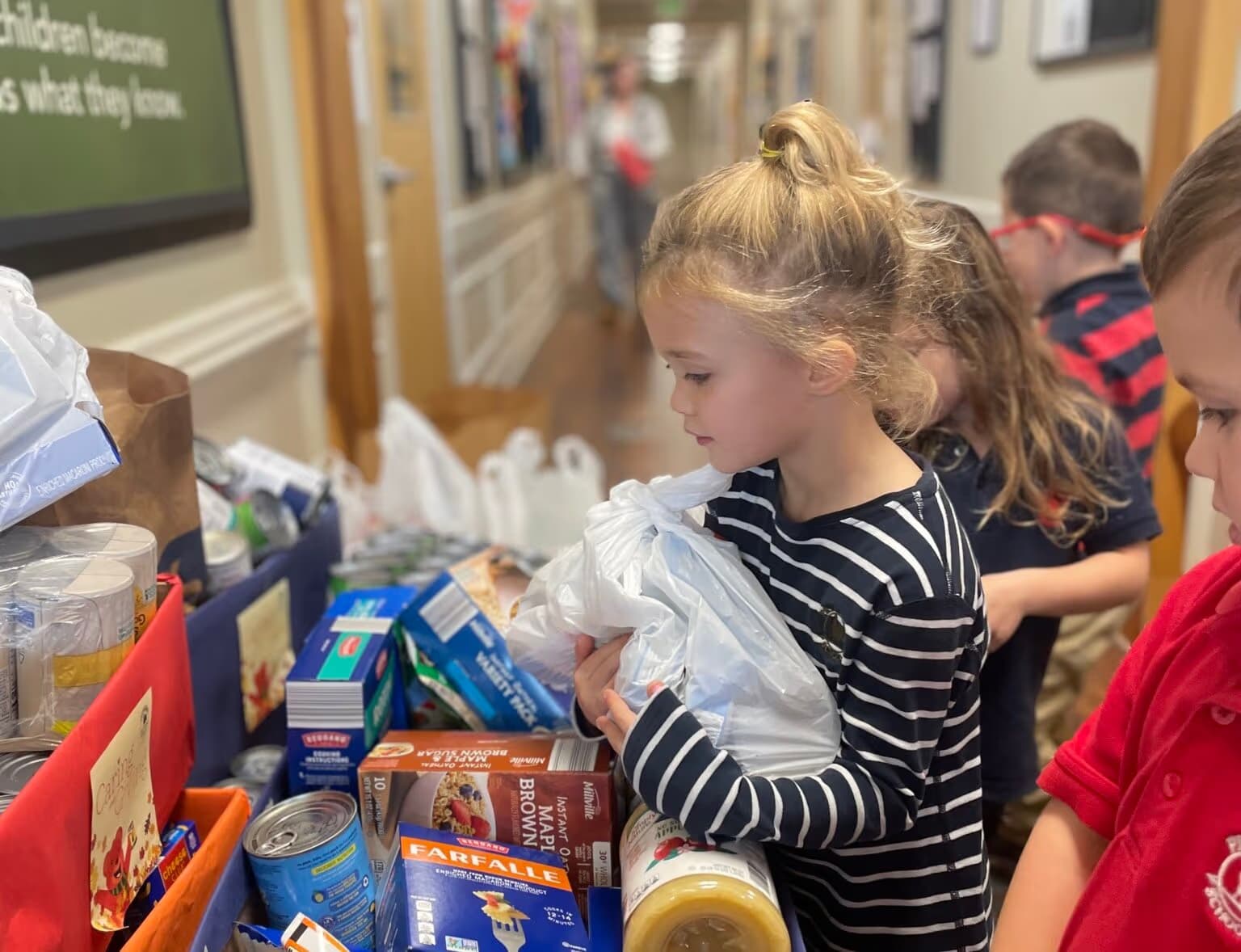
A meaningful part of the Caring & Giving unit is our food drive, which gives children and families an opportunity to support those experiencing food insecurity in their local communities.
By participating in the food drive, children can see that even simple actions, such as donating a can of soup or a box of pasta, can help meet the needs of others. The experience transforms the concept of generosity from something abstract into something tangible and meaningful.
Just as importantly, children learn that giving isn’t about receiving recognition. It’s about helping others because we care.
Growing Compassionate Citizens
The lessons children learn about generosity during their early years can last a lifetime. When they experience the joy of helping others and see the difference their actions can make, they begin to understand how they can positively impact the world around them.
Whether it’s sharing with a friend, helping a neighbor or participating in a community food drive, every act of giving helps children build empathy, compassion and a sense of responsibility for others.
As families and educators work together to nurture these qualities, we’re helping to raise future citizens who understand that one of life’s greatest rewards comes not from what we receive, but from what we give.