Nov 16, 2026
10 Age-Appropriate Chores That Build Life Skills & Independence (Age-by-Age Guide)
10 min read
Your child wants to help. They may show it by carrying a spoon to the table or zipping their own coat. You can turn that eagerness into confidence, responsibility and independence by handing over a job that fits their age, and the right job changes with every birthday.
University of Virginia researchers followed 9,971 children from kindergarten through third grade. Compared with regular helpers, children who rarely did chores in kindergarten had 17% to 27% higher odds of landing in the bottom fifth of their own third-grade ratings for helpfulness, friendships, schoolwork and life satisfaction.¹
Teachers at Primrose Schools®, The Leader in Early Education and Care®, see children’s eagerness to help in classrooms every day and give them age-appropriate ways to join in.
These ten chores for ages 2 to 11 come in four stages. Each one has a plain reason it helps and a tip for the day your child resists.
Chores for Toddlers and Early Preschool (Ages 2 to 3)
By 30 months, most children can follow simple routines when you ask, like helping to pick up toys at clean-up time.²
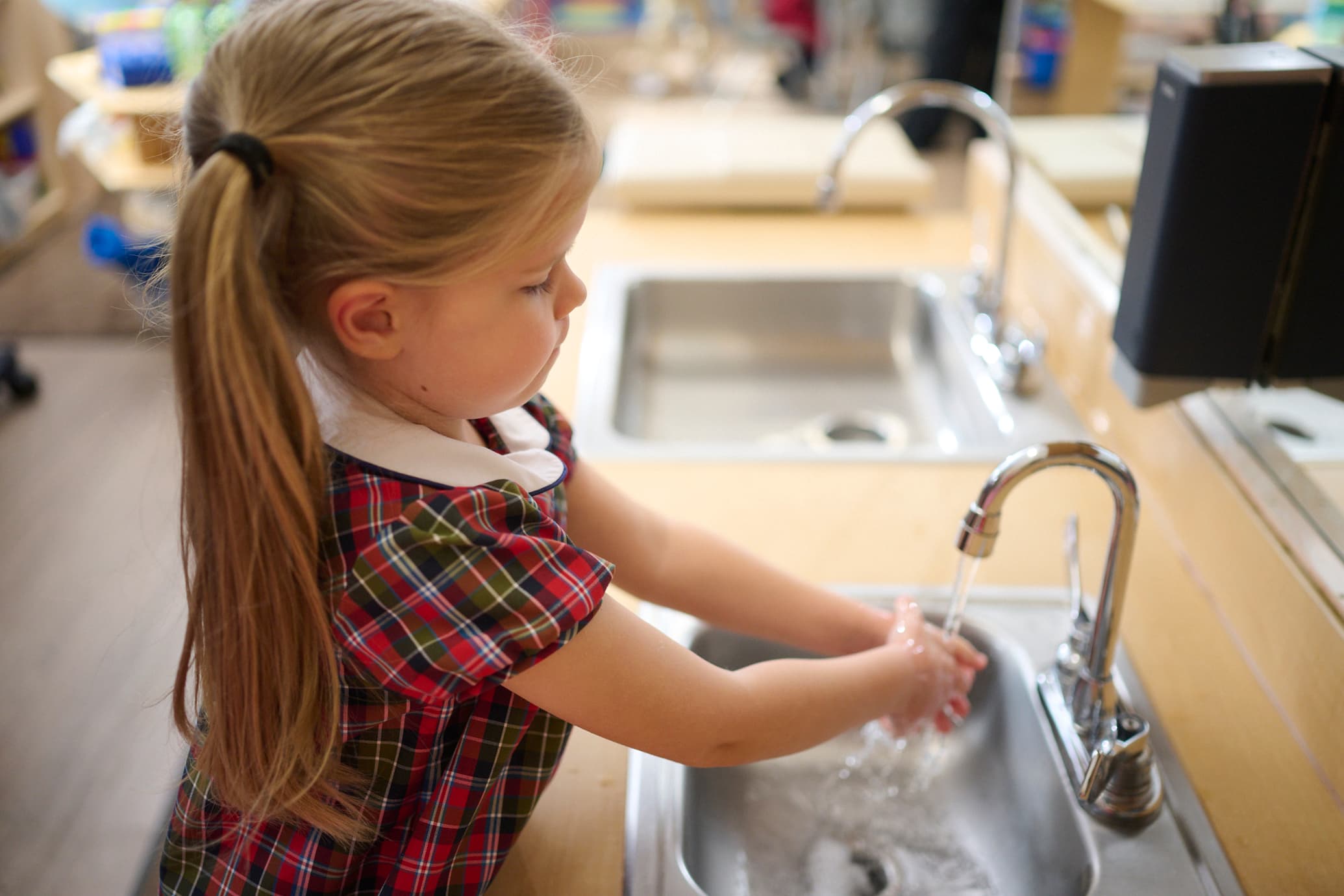
Toddlers learn by watching you, so they join a chore more readily when you work beside them. Primrose school teachers model small tasks first, such as washing hands before lunch or snack, and then invite children to join in.
Link each chore to a moment that already happens every day. Start at snack time, and your toddler will soon expect the job as part of the routine.
1. Put Toys in a Bin
Your toddler can clean up with one bin and one toy at a time. Hold the bin close, drop in a block yourself and sing out, “Clean-up time!” Then hand them the next block.
Clean up the same way each day to give your toddler practice at self-control.³
Your little one watches the bin fill up and sees what finishing a task looks like. Celebrate by saying, “You put all the blocks away!” so they feel capable and included.
For extra fun, play “Clean Up After Yourself” by The Primrose Friends and challenge them to finish before the song ends.
2. Carry Unbreakable Items to the Table
Toddlers can carry a napkin or a plastic cup to the table. Hand over one item at a time, point to their spot and say, “Carry this over and set it down.” Most 30-month-olds can follow a two-step request like that.²
On each trip, your toddler walks steadily while holding your request in mind.
Little ones love a grown-up job. Give this one a title and tell them, “You’re our table helper!” so they feel trusted and included.
Chores for Preschoolers (Ages 4 to 5)
Preschoolers ages 4 to 5 can feed a pet, wipe up a spill and put clean clothes in a drawer with you nearby. By age 5, most children can do simple chores at home, like matching socks or clearing the table after eating.⁴
Cheer them on from nearby and let your preschooler take the lead.
1. Feed a Pet, With You Nearby
Your preschooler can measure one scoop of food into the pet’s bowl at the same time each day, with you close enough to steer. End with a handwash together so you both finish the job the same way each time.
A hungry pet is counting on your little one, so the job is easy to remember. They learn that their actions affect others, and they practice empathy and kindness.
As the pet comes running, say, “Look how happy they are because you remembered!”
Children in Primrose classrooms put on gardening gloves and weed in the Primrose Patch, which gives them a living thing to care for, much like a pet.
2. Wipe Up a Spill
Your preschooler can clean up their own spills. Pause right after a cup tips and ask, “What spilled?” Let them wipe up water or juice, and handle anything sharp or hot yourself.
With every wipe, your preschooler takes responsibility, solves a small problem and learns to recover from a mistake.
If your child gets upset, stay calm and say, “Mistakes happen, and we can fix this.” Count the wipes aloud to keep it light.
Primrose school teachers encourage children to cooperate and clean up together throughout the day, so you can invite a sibling to help with a big spill at home.
3. Put Clean Clothes in a Drawer
Preschoolers can put clean, folded clothes where they belong. Hand over a stack of folded shirts, name one drawer and say, “Shirts go in the top drawer.”
Your 5-year-old sorts clothes by type and matches each stack to its space, using the same sorting skills they will need for early math and reading.
Give your preschooler a drawer of their own to practice independence. Tell them, “You’re taking care of your clothes!” so they hear that you trust them.
🧩 More From Primrose: The Power of Letting Children Do It Themselves
Chores for Early Elementary Children (Ages 6 to 8)
Children ages 6 to 8 can take on chores with several steps, like packing their own backpack, setting the table and making their bed.
Kindergarten helpers in the University of Virginia study felt more capable by third grade, though the study describes an association and chores are one piece of the picture.¹
Trade reminders for routines at this stage.
1. Pack Their Own Backpack
Your child can pack their own backpack with a checklist taped by the door. List the homework folder and the water bottle, hand over a pencil and let them check off each item.
With the full list in view, your 7-year-old plans ahead and checks their own work. Multi-step jobs like this build planning, organization and self-checking, skills that support schoolwork. They gain confidence by finishing the list alone.
Say your young helper stood by the door on Monday morning, pencil in hand, and checked off each item before you found your keys.
2. Set the Table
Name your little one the host of tonight’s dinner and put them in charge of the table. Count the people together, then let them give every seat a plate and a fork.
They count and match one plate to each person, and they see how their work helps the whole family.
Your little helper gets an instant payoff from sitting down to a table they set themselves, and the host title gives them ownership of the family meal.
3. Make the Bed
Your 8-year-old can make their own bed in three steps. Show the routine first by pulling up the comforter, smoothing the wrinkles and fluffing the pillow.
Each morning, your young helper practices doing steps in order and noticing details, habits that carry over to writing and problem solving. They also learn to look after their own space.
If they ask, “Why bother?” make the bed side by side at first and keep it to those three steps. Finish with a high five.
🧩 More From Primrose: 7 Essential Life Skills that Extend Beyond the Classroom
Chores for Older Elementary Children (Ages 9 to 11)
Children ages 9 to 11 can run a load of laundry and prepare part of a meal.
Between ages 9 and 11, children grow more independent from the family, so this is a good time to build their sense of responsibility. You can involve them in household tasks like cleaning and cooking.⁵
Stay close for the stove and the detergent, and let your older child own the rest.
1. Do Their Own Laundry, Start to Finish
Your older child can take a load of laundry from the hamper to the drawer. Walk through the steps a few times, then hand over a load to sort, wash, dry, fold and put away. Measure the detergent together at first.
Your 10-year-old follows a clear sequence from sorting to putting away and manages a multi-step job alone. They finish with a stack of clean shirts they washed themselves, and they feel proud of it.
Along the way, they build time management and organization and learn to finish a job before free time begins. Those life skills will serve them through the teen years and beyond.
2. Prepare a Simple Part of a Meal
Your 11-year-old can prepare one part of tonight’s dinner, like washing the vegetables or stirring the pot, with an adult nearby. Let them choose which job sounds best, then step in when they need a hand.
Your young helper puts math to work through measuring, fractions and timing, and gets hands-on practice with everyday materials. At the stove or sink, they also earn a place in the shared family meal, which builds confidence and belonging.
In Primrose classrooms, children eat snack and lunch family style, and the Lunch and Snack Helper passes out plates and napkins. Your older child can take that job at home before dinner too.
If they hesitate at the stove, start with the washing and give them a title like sous chef.
🧩 More From Primrose: Chore Chart for Children

How Primrose Schools Support Life Skills and Independence
For more than 40 years, Primrose Schools, The Leader in Early Education and Care, has served children from 6 weeks to 12 years old, and this franchise now includes 570+ locally owned and operated schools across the country that welcome families.
We believe who children become is as important as what they know. That belief shapes Balanced Learning®, the Primrose approach that blends purposeful play with nurturing guidance from teachers to build curiosity, creativity, confidence and compassion, what Primrose calls Active Minds, Healthy Bodies and Happy Hearts®.
In Primrose classrooms, that approach shows up in three ways:
- Classroom Helper Chart (Preschool Pathways through Kindergarten). Children take turns at weekly jobs like Lunch and Snack Helper, Gardener, Librarian and Equipment Manager, and every child tries each job. Ally℠ the Bunny, the Primrose Friend who models responsibility, encourages children to clean up after themselves. Teachers also guide lessons where children put on gardening gloves and weed in the Primrose Patch, and they encourage cooperation and teamwork to clean up throughout the day.
- Project Time (Explorer Program). Children in Before & After School Care work in small groups each day on a project that runs for days or weeks, such as a community service initiative or an engineering design challenge with coding and robotics. They practice leadership, cooperation and responsibility along the way.
- Balanced Assessment (Infant through Kindergarten). Teachers observe each child through the day and collect work samples, photos and notes in an Evidence of Learning portfolio that shows progress milestone by milestone.
First Things First reports that 90% of a child’s brain develops in the first five years. Primrose school teachers weave life skills into everyday classroom moments during those years.
In a Spring 2024 assessment with the Bracken School Readiness Assessment, 4th Edition, 97% of Primrose Pre-Kindergarten students demonstrated kindergarten-readiness benchmarks.
To learn more about how a Primrose approaches life skills and independence, including how Primrose School teachers help support children’s confidence and responsibility throughout the day, find a school near you. Each school is independently owned and operated, so program details may vary by location.
📍 Find a Primrose School Near You
References
White, E. M., DeBoer, M. D., & Scharf, R. J. (2019). Associations between household chores and childhood self-competency. Journal of Developmental & Behavioral Pediatrics, 40(3), 176–182. https://doi.org/10.1097/DBP.0000000000000637
Centers for Disease Control and Prevention. (2026, May 15). Milestones by 30 months. Learn the Signs. Act Early. https://www.cdc.gov/act-early/milestones/30-months.html
Tiret, H., & Hodges, R. (2016, September 29). The benefits of kids doing chores. Michigan State University Extension. https://www.canr.msu.edu/news/the_benefits_of_kids_doing_chores
Centers for Disease Control and Prevention. (2026, May 15). Milestones by 5 years. Learn the Signs. Act Early. https://www.cdc.gov/act-early/milestones/5-years.html
Centers for Disease Control and Prevention. (2024, May 15). Positive parenting tips: Middle childhood (9–11 years old). https://www.cdc.gov/child-development/positive-parenting-tips/middle-childhood-9-11-years-old.html